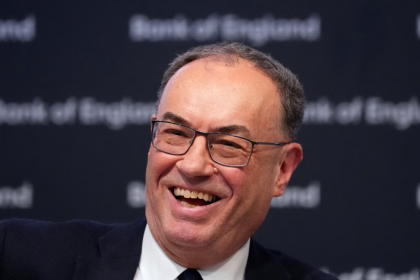

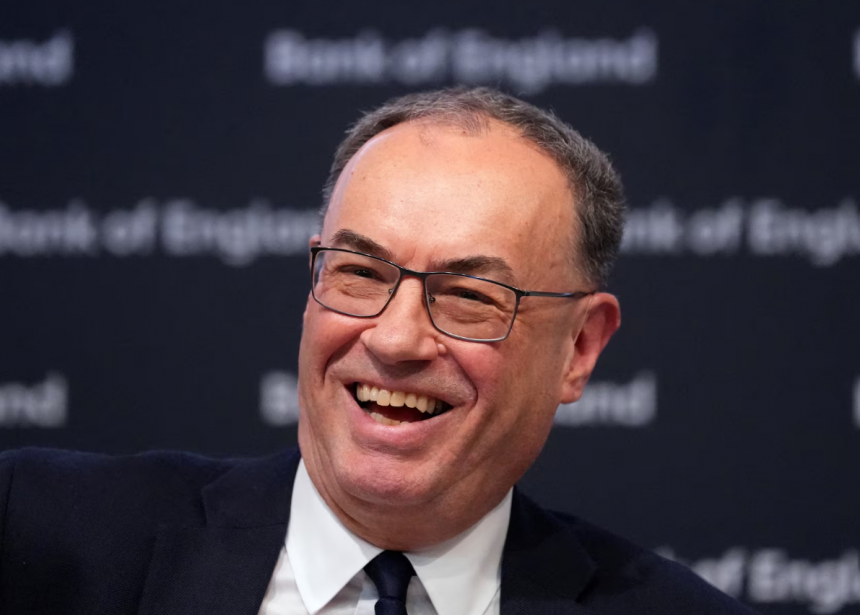
Andrew Bailey is one of the most important figures in modern British economic life. As Governor of the Bank of England, he occupies a role that is both technical and deeply public. Central bankers are not elected politicians, yet their decisions affect mortgages, savings, inflation, business investment, exchange rates, and the general economic mood of a country. Bailey’s career reflects the difficult balance between institutional caution, financial stability, and public accountability.
Andrew John Bailey was born in 1959 and built much of his professional life inside the Bank of England and financial regulation. His background is not that of a media politician or public campaigner, but of a career financial official. He studied history at Cambridge and later completed doctoral work, before entering the world of central banking. This academic and institutional background shaped his style: analytical, cautious, and grounded in systems rather than slogans.
Bailey’s long connection with the Bank of England gave him experience across several major areas of financial policy. He served as Chief Cashier, a role associated with the issuance of banknotes and the operational side of the Bank’s public identity. He later became Deputy Governor for Prudential Regulation, a position focused on the safety and resilience of banks and financial institutions. Before becoming Governor, he also served as Chief Executive of the Financial Conduct Authority. The Bank of England’s own biography states that his term as Governor began on 16 March 2020 and runs to 15 March 2028; it also notes his earlier role as Chief Executive of the Financial Conduct Authority from 2016 until he became Governor.
The timing of his appointment as Governor was extraordinary. Bailey began the role in March 2020, just as the COVID-19 pandemic was turning into a global economic emergency. Few central bankers begin their tenure in such dramatic conditions. The Bank of England had to respond rapidly to protect financial stability, support market functioning, and help prevent a health crisis from becoming an even deeper financial collapse.
During the pandemic, central banks around the world used extraordinary tools: interest rate cuts, asset purchases, liquidity support, and coordination with fiscal policy. These actions were not without controversy, but they reflected the scale of the emergency. Bailey’s early governorship was therefore defined by crisis response rather than normal monetary management.
The next major challenge was inflation. After years of low inflation, Britain and many other countries experienced a sharp rise in prices driven by supply disruption, energy shocks, pandemic after-effects, and geopolitical pressures. For the Bank of England, this created a painful policy environment. Raising interest rates can help control inflation, but it also increases borrowing costs for households and businesses. Moving too slowly risks allowing inflation to become embedded; moving too quickly risks damaging growth.
Bailey became a public face of this difficult period. He had to explain why inflation was rising, why interest rates were increasing, and why monetary policy could not solve every economic problem. This is one of the hardest parts of central banking: the institution has powerful tools, but not unlimited power. It can influence demand and expectations, but it cannot directly produce gas, repair supply chains, build houses, or set global commodity prices.
His communication style has sometimes been criticized. Central bankers must speak carefully because markets react to their words. Too much clarity can remove necessary flexibility; too much caution can appear evasive. Bailey has faced scrutiny over the Bank’s inflation forecasts and policy judgments, especially during periods when inflation proved more persistent than expected. Such criticism is not unusual for central bank governors, but in a cost-of-living crisis it becomes politically and socially intense.
Andrew Bailey’s role also involves financial stability. The Bank of England is not only responsible for monetary policy; it also plays a central part in ensuring that the financial system remains resilient. This includes oversight of banks, stress testing, market functioning, and crisis readiness. Bailey’s regulatory experience at the FCA and within the Bank is relevant here. He understands that financial crises often begin in technical details but quickly become social and political events.
His time at the Financial Conduct Authority also shaped his reputation. The FCA is responsible for regulating financial markets and protecting consumers, a role that often involves difficult decisions about misconduct, market fairness, and institutional accountability. Bailey’s period there exposed him to the challenges of regulating a complex financial sector that is essential to the British economy but often distrusted by the public.
The Governor of the Bank of England must also defend institutional independence. In a democracy, economic policy is divided between elected governments and independent central banks. Governments set fiscal policy, taxation, and spending, while the Bank sets monetary policy to meet the inflation target. This independence is designed to prevent short-term political pressure from dominating decisions about price stability. But independence also requires legitimacy. The public must believe that the Bank is competent, accountable, and acting in the national interest.
Bailey’s governorship has therefore unfolded in a period when central banking itself has become more politically visible. Inflation, interest rates, mortgage costs, and wage debates have brought monetary policy into everyday conversation. For many households, the Bank of England is no longer an abstract institution; it is connected directly to monthly payments and living standards.
His legacy will likely depend on how successfully Britain returns to stable inflation without unnecessary damage to employment and growth, and how the Bank restores confidence after a period of forecasting errors and public criticism. Central banking is often judged harshly in real time and more fairly in hindsight. Decisions made under uncertainty can look obvious only after the fact.
Andrew Bailey is not a dramatic public figure, and that is partly the point. Central banking rewards caution, technical competence, and institutional discipline. Yet the consequences of his work are enormous. His career shows that some of the most powerful people in public life do not campaign, give rallies, or seek applause. They work through committees, forecasts, minutes, market signals, and policy rates.
In the end, Andrew Bailey represents the burden of economic stewardship in an unstable age. His governorship has been shaped by pandemic crisis, inflation shock, financial-market stress, and public pressure. Whether admired or criticized, he occupies one of the most consequential positions in Britain. His decisions affect not only banks and markets, but the daily lives of millions of people.